


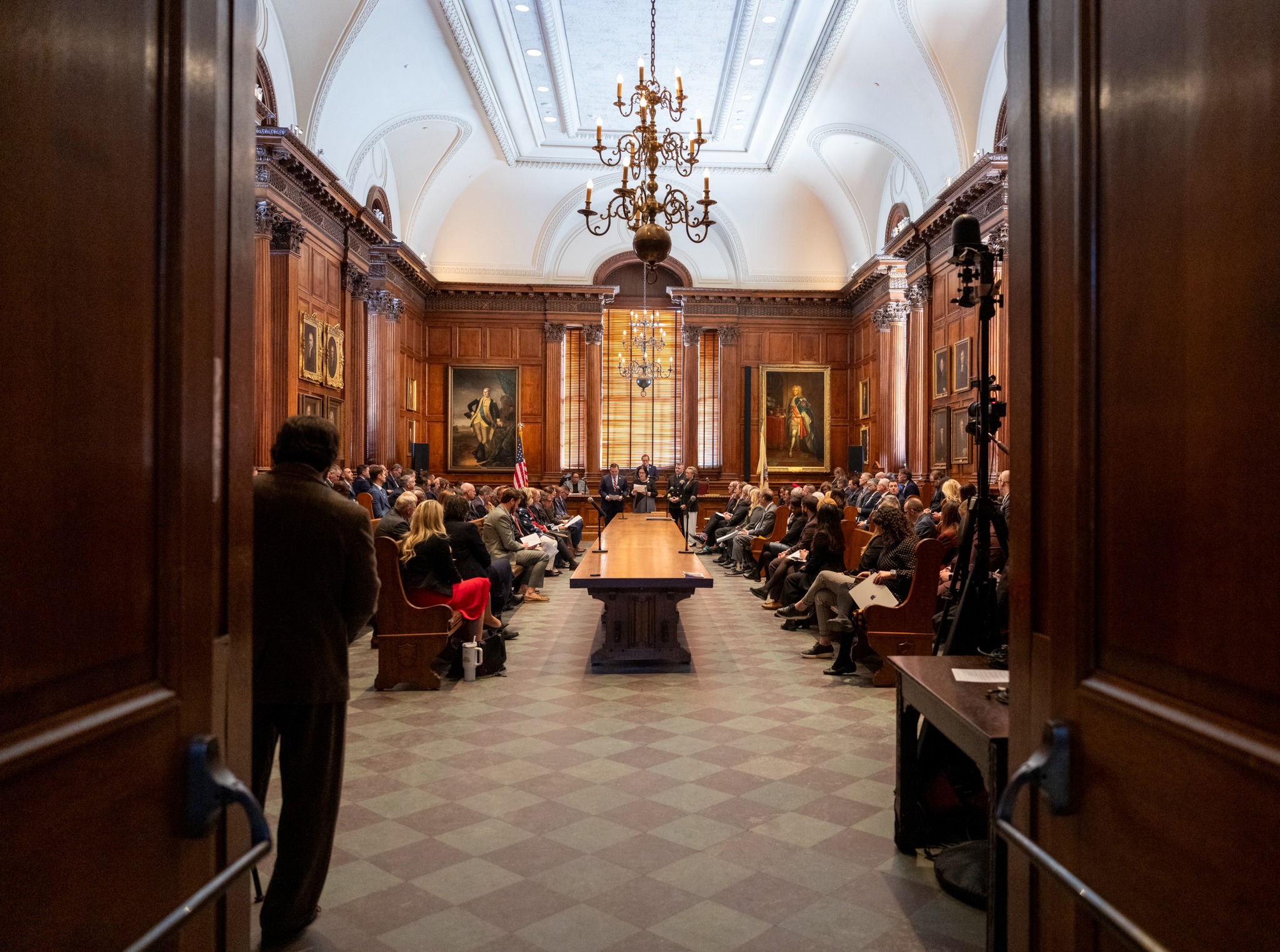
It was déjà vu all over again for the General Assembly, which held a commemorative meeting at Nassau Hall on the Princeton University campus on Feb. 5.
That’s because it was the first time in 250 years that state lawmakers met at Nassau Hall. The first meeting of the General Assembly in the fledgling State of New Jersey was held in August 1776 – less than two months after the state adopted its first constitution and declared independence from Great Britain.
Princeton University President Christopher Eisgruber welcomed 65 Assembly members and other dignitaries to Nassau Hall, where many of the nation’s founding fathers had studied when Princeton University was known as The College of New Jersey. Its name was changed to Princeton University in 1896.
Eisgruber reminded attendees that the town of Princeton also was the nation’s capital for several months in 1783, and Nassau Hall – which was built in 1756 – served as the home of the United States of America’s government.
“We are honored to host the commemoration of that very first gathering (of lawmakers),” he said. “We are grateful for the partnership and strong relationship with legislators across New Jersey (today).”
In his opening remarks, Assembly Speaker Craig Coughlin said it was humbling and meaningful to convene the commemorative meeting of the General Assembly at Nassau Hall.
“Today isn’t just a change of venue for us,” he said. “It is a return home – a return to our beginnings, to the place where our Legislature first met in 1776. It was at the dawn of an uncertain democracy.
“These walls at Nassau Hall have borne witness to moments that shaped not just New Jersey, but the nation. It was here and across the state that New Jersey resisted tyranny and defied the crown.”
Returning to Nassau Hall also is a reminder that the work of democracy is still ongoing, Coughlin said. It did not end in 1776. It was just the beginning, and it has not yet ended.
“As we gather here where it all began, we honor those who came before us,” he said. “It is my privilege to say to Nassau Hall and Princeton University, thanks for having us back. It’s good to be home.”
Oliver Christian, the United Kingdom’s Consulate General, said that few other buildings than Nassau Hall capture the complexity and intimacy of the early relationship between America and the United Kingdom so powerfully.
Christian pointed to a portrait of King William III of England, who reigned from 1689 to 1702, on the wall of the Faculty Room where the commemorative meeting was being held. King William III was a member of the House of Orange-Nassau, from which Nassau Hall takes its name and the university takes its colors of orange and black.
He also gestured to a portrait of John Witherspoon, who was president of Princeton University from 1768 to 1794. He was the only 18th-century college president to have signed the Declaration of Independence.
There are values that bind the two countries together, Christian said.
“Freedom is a value right at the heart of America, but it is also at the heart of the special relationship between America and the United Kingdom,” he said. It binds us together in a shared history and our common future.”
The foundations of American liberty were shaped on British shores, he said. The statement in the Declaration of Independence that “all men are created equal” echoes the Magna Carta, which was signed by King John in 1215.
“The 250th anniversary of American independence is not just an American story,” Christian said. “It is our story, as well – a shared heritage of liberty and freedom.”
It is also one of history’s most extraordinary reconciliations – from former adversaries to the closest of allies, he said. The United States came to the United Kingdom’s aid when it was attacked by the Nazis, and helped to rebuild it after World War II.
The 250th commemorative session was highlighted by resolutions approved by the General Assembly that acknowledged the 280th anniversary of the founding of Princeton University in 1746, and celebrating the role of the village of Princeton and the surrounding area, and New Jersey in the Revolutionary War.
The resolutions also saluted the history and service of the two warships and the submarine that have been named the U.S.S. New Jersey starting in 1906, and the 300-plus years of service of the New Jersey National Guard, which traces its origins to the signing of the first Militia Act in 1704.
The resolutions noted consequential pieces of legislation enacted between 1776 and 1826, and also honored the efforts made by lesser-known New Jerseyans who supported the American Revolution. They included two enslaved men and a free Black man who served in the Continental Army, and a woman sculptor who collected sensitive information from the British military and political figures who commissioned her sculptures and passed it on Revolutionary War leaders.
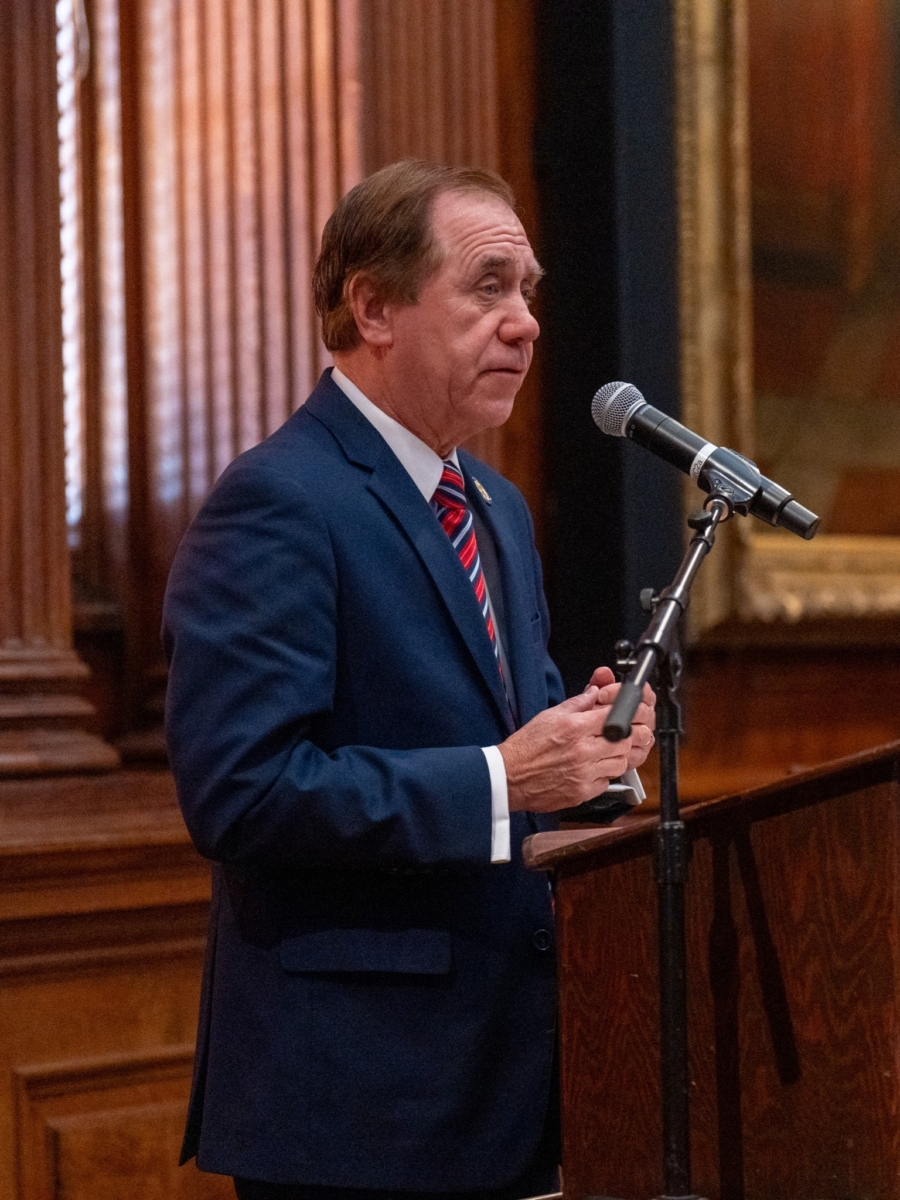
“Today isn’t just a change of venue for us,” Assembly Speaker Craig Coughlin said. “It is a return home – a return to our beginnings, to the place where our Legislature first met in 1776.”