


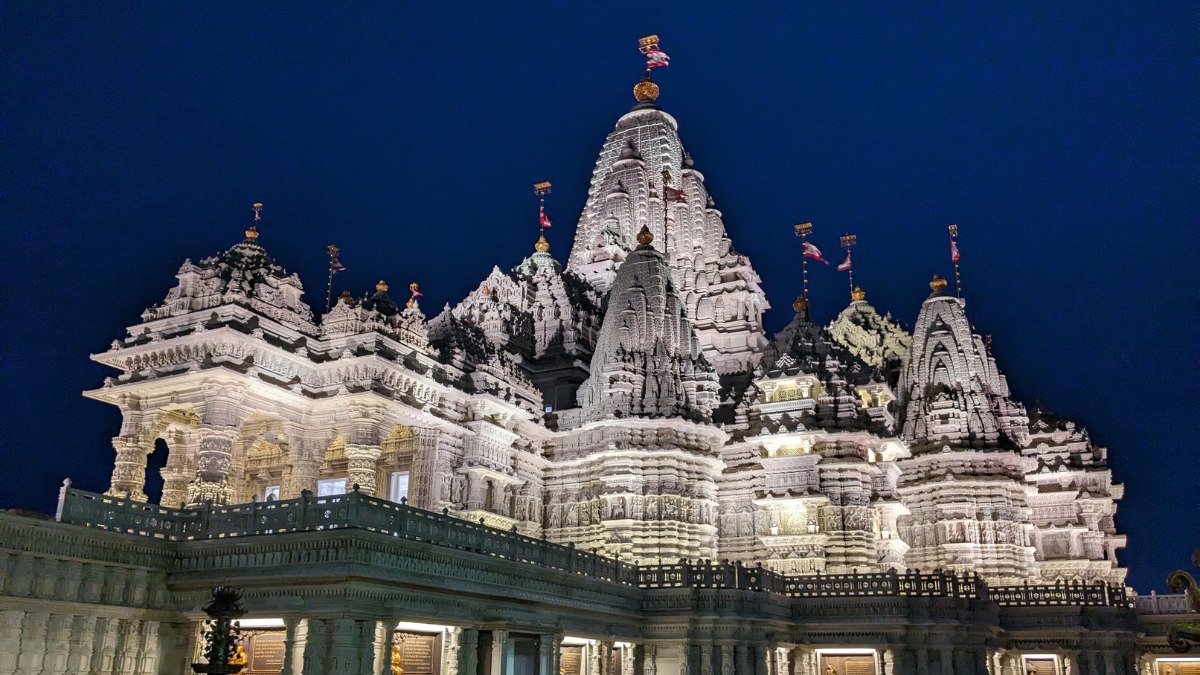
The BAPS Shri Swaminarayan Mandir in Robbinsville, New Jersey, also known as BAPS Swaminarayan Akshardham, is the largest Hindu temple in the United States and the second-largest in the world. Built by the Bochasanwasi Akshar Purushottam Swaminarayan Sanstha (BAPS), the temple spans 183 acres and features a marble mandir completed in 2023.
The campus includes two temples, a welcome center, cultural exhibits, and a research institute. All marble carvings were crafted in India and assembled in New Jersey. Today, the Robbinsville temple serves as both a place of worship and a cultural landmark, welcoming all visitors interested in Hindu architecture, spirituality, and Indian heritage.
In this guide, you’ll find everything you need to plan your visit, from directions and hours to what to see, what to wear, and how to experience the temple with respect and ease.
Architecture of the Largest Hindu Temple in New Jersey
The BAPS Shri Swaminarayan Mandir in Robbinsville is built in the Nagaradi style of traditional Hindu architecture. Made entirely from Italian Carrara marble, it contains no steel or metal supports – only the third temple of its kind in the world.
The temple stands 42 feet tall, 133 feet long, and 87 feet wide. Visitors first pass through the Mayur Dwar, a carved gateway featuring 236 marble peacocks, along with elephants, dancers, and saints. This leads to a covered mandapam, which protects the temple from the elements and allows year-round access.
Inside and out, the temple features 98 carved pillars that depict scenes from Hindu scriptures, 66 arches modeled after peacock feathers, and 144 statues of deities and devotees. The ceilings display 58 unique designs, and the base of the structure includes 91 marble elephants, each carved with garlands or musical instruments. Rising above the sanctum are 40 spires (shikhars) and 10 domes, symbolizing spiritual ascent.
Every piece of marble was carved by hand in India and shipped to New Jersey, traveling more than 21,500 miles from quarry to final assembly.
The inner sanctum houses sacred images of Bhagwan Swaminarayan and Gunatitanand Swami, worshiped together as Akshar-Purushottam Maharaj. Surrounding shrines honor Radha-Krishna, Sita-Rama with Hanuman, Shiva-Parvati with Ganesh and Kartikeya, and Lakshmi-Narayana.
The mandir’s interior is quiet and reverent. The scent of incense, the glow of chandeliers, and the detail in every stone create an atmosphere centered on devotion and reflection.
BAPS Robbinsville Temple Visiting Hours and Best Times
The BAPS Shri Swaminarayan Mandir in Robbinsville is open to visitors daily from 9:00 AM to 7:30 PM, with the exception of Tuesdays, when the entire campus, including the temple, café, and gift shop, remains closed. While admission is free, the last entry is typically allowed before 7:00 PM, so it’s best to arrive earlier to have enough time to explore the site at a relaxed pace.
The Shayona Café serves freshly prepared vegetarian Indian meals and snacks from 11:00 AM to 8:00 PM, and the gift shop, known as the Akshardham Souvenir Store, is open from 9:30 AM to 8:30 PM, offering books, devotional items, sweets, and souvenirs to take home.
If you’re hoping for a quiet and peaceful visit, the best time to come is on a weekday or early in the morning on weekends, when the temple is less crowded and the atmosphere is calm. Arriving shortly after opening, around 9:00 AM, allows you to enjoy the campus before the midday rush. Late afternoon, after 3:00 PM, is also a great option, especially if you’d like to see the marble temple glow in the soft evening light. On weekends and Hindu festival days, the temple can become quite busy, and advance registration is required, even though entry remains free; visitors are encouraged to reserve a timed entry online and arrive at their scheduled time to help manage the flow of guests.
For those interested in witnessing daily worship, the temple hosts arti ceremonies twice each day, mid-morning around 11:15 AM and again in the early evening between 6:30 and 7:00 PM, where priests perform a ritual offering of light accompanied by devotional singing. Visitors are welcome to observe quietly from the side or back of the temple hall, and the evening arti in particular is a serene experience, as the temple gradually lights up against the setting sun.
How to Get to the BAPS Temple in Robbinsville, NJ
The BAPS Shri Swaminarayan Mandir is located at 112 North Main Street, Robbinsville, NJ 08561, in central New Jersey. Although this is the official address, GPS systems may not recognize it correctly, so the best way to find it is by entering “BAPS Swaminarayan Akshardham, Robbinsville” into Google Maps, which will guide you accurately.
The temple is about halfway between New York City and Philadelphia, making it easy to reach by car or public transportation.
Getting There by Car
Driving is the most convenient option. From New York City, the temple is about 59 miles away, or a 1 to 1.5-hour drive, depending on traffic. Take the New Jersey Turnpike (I-95) south to Exit 7A, then follow I-195 West to Exit 5B, which leads to US-130 North. From there, take a jug-handle turn at Voelbel Road to reach North Main Street, and you’ll see the temple ahead.
From Philadelphia, the temple is about 37 to 50 miles north, roughly an hour’s drive. Take I-95 North (also part of the NJ Turnpike) to Exit 8 for Route 33, then follow NJ-133 and US-130 South, and turn right onto North Main Street.
Once you arrive, there is free on-site parking available, including handicap-accessible spaces close to the entrance. During busy weekends or events, volunteers will help direct traffic and guide you to the nearest available spot. You may even see the temple’s white marble domes in the distance as you approach Robbinsville, especially on clear days.
Getting There by Train
If you prefer public transportation, you can take the NJ Transit Northeast Corridor Line. From New York Penn Station, take a train toward Trenton and get off at Princeton Junction, which takes about an hour. From Newark Penn Station or Newark Airport, you can also catch the same line to Princeton Junction.
If you’re coming from Philadelphia, take a SEPTA or Amtrak train to Trenton Transit Center, then switch to NJ Transit heading toward New York, and get off at Hamilton Station, just one stop past Trenton.
From either Princeton Junction or Hamilton, the temple is about 10 to 12 miles away. There is no direct bus from the stations to the temple, so you’ll need to use a taxi or rideshare service like Uber or Lyft to reach the site. The ride usually takes around 20 minutes. On weekends, rideshare wait times may be longer due to high demand, so plan ahead.
If you’re visiting as a group, it may be easier and more affordable to pre-book a car service or share a ride from the train station.
Getting There by Bus
From New York City, you can take the Coach USA/Suburban Transit Bus (Route 300) from Port Authority Bus Terminal to East Windsor, NJ. Get off at the Hightstown stop, which is about 4 miles from the temple. From there, use a taxi or rideshare to reach the mandir.
Currently, there are no direct public bus routes to Robbinsville Township, and local bus services in Mercer County do not stop near the temple. If you’re traveling from Philadelphia, public bus service is limited, so driving or taking the train is a better option.
From Nearby Airports
The closest major airport is Newark Liberty International (EWR), located about 45 miles north of the temple. From EWR, you can take the AirTrain to Newark Airport Rail Station, then board NJ Transit to Princeton Junction, and take a taxi or rideshare from there. The entire trip takes about an hour.
You can also fly into Philadelphia International Airport (PHL), which is about 50 miles southwest, or JFK Airport in New York, which is farther but still accessible. In all cases, renting a car or booking a car service is often the easiest option if you’re visiting from out of state.
On Arrival
Once you reach North Main Street, you’ll see a long driveway leading into the temple campus. Security volunteers at the entrance will direct you where to park and where to check in. While the campus is large, it’s well organized and clearly marked, so you’ll have no trouble finding your way.
For the most accurate directions, stick to Google Maps or the official location listing. Avoid relying solely on older GPS devices, as not all of them have updated maps that include this newer site.
Dress Code and Visitor Rules at the Hindu Temple in NJ
Visiting the BAPS Shri Swaminarayan Mandir in Robbinsville is free and open to all, but as a place of worship, the temple follows specific guidelines to preserve its sacred atmosphere. All visitors are expected to dress modestly, behave respectfully, and follow a few important rules while on the campus.
Dress Code
The temple requires that both men and women cover their shoulders and legs. Shorts, short skirts, tank tops, sleeveless shirts, and any low-cut or midriff-baring clothing are not allowed. A simple outfit like jeans or long pants with a t-shirt that covers the shoulders is perfectly acceptable. Indian clothing is not required, but modest, respectful attire is expected at all times.
If someone arrives in clothing that doesn’t meet the dress code, the temple staff can provide a wrap-around cloth (sarong) to help cover up. Visitors are also asked to avoid clothing with inappropriate images or offensive text – it’s extremely important to maintain a respectful environment for everyone inside the mandir.
Footwear
Shoes must be removed before entering the temple building. There are clearly marked areas with shoe racks at the entrance, and thousands of visitors store their shoes there safely. If preferred, you can carry your shoes in a bag, but you may not bring them inside the temple hall. Socks are allowed, and many visitors choose to wear them for comfort, especially during cooler months when the marble floors can feel cold.
Entry and Security
Admission to the temple is free, and no tickets are required for most visits. However, on weekends, holidays, and major Hindu festivals, you must register online in advance and choose a free timed entry slot. You’ll receive a QR code or confirmation to show at the entrance. Walk-in visits are usually allowed on weekdays (Monday, Wednesday through Friday) and during non-holiday periods.
All visitors go through a brief security screening, including a metal detector. Large bags or backpacks are not permitted, and all bags may be inspected. You should leave bulky items in your car or avoid bringing them. Weapons, sharp objects, alcohol, tobacco, and outside food or drinks are not allowed on the property.
General Behavior and Etiquette
Once on temple grounds, visitors should maintain a quiet and respectful demeanor, especially inside the mandir. Talking should be kept to a minimum, and mobile phones should be silenced or turned off. If you need to take a call, step outside the main building.
Chewing gum, smoking, vaping, and the use of alcohol or drugs are strictly prohibited, as the temple grounds are a spiritual, vegetarian, and substance-free space. Outside food and drink are not allowed, but the Shayona Café on campus offers a variety of vegetarian options.
Pets are not permitted, with the exception of certified service animals.
Inside the Mandir
While visiting the temple interior, you are welcome to observe prayers and rituals, including the daily arti ceremony. If a program is taking place, men and women often sit on separate sides of the prayer hall. You may join your hands in a respectful namaste if you wish, though this is not required.
Please do not touch the statues (murtis), altars, or any sacred objects, as only temple priests are allowed to do so. Avoid pointing your feet toward the deities or sitting on raised platforms, as these gestures are considered disrespectful in Hindu tradition.
Children are welcome, but should remain with a parent or guardian and avoid running, shouting, or playing inside the temple. Volunteers are available throughout the campus and are happy to answer questions or guide visitors, especially on weekends when informal tours may be offered.
Everyone, regardless of religion or background, is welcome at the Robbinsville temple. As long as you follow the guidelines—dress modestly, speak quietly, and treat the space and others with respect—you will be warmly welcomed as a guest.
Amenities and Facilities at the Indian Temple in Robbinsville
The BAPS Shri Swaminarayan Mandir in Robbinsville offers more than enough amenities so that visitors have a comfortable and welcoming experience. The campus is organized, clean, and well-managed, with everything you need for a peaceful half-day visit.
Visitor Center and Information Desk
At the entrance, the Visitor Center serves as the main check-in area and information hub. Volunteers provide maps, brochures, and helpful guidance about the temple grounds. Those who registered online can check in here. The center often includes educational displays about the construction of the mandir and the Swaminarayan tradition. Guided tours are sometimes available during weekdays or upon request.
Restrooms and Accessibility
Clean restrooms are located near the entrance and inside the Shayona Café building. All restrooms include western-style toilets and are stocked and maintained regularly. There are also accessible stalls and ramps to accommodate visitors with mobility needs. Not to mention, water fountains are nearby, and bottled water is also available for purchase at the café or gift shop.
Shayona Café (Vegetarian Dining)
The Shayona Café, open from 11:00 AM to 8:00 PM (closed on Tuesdays), serves pure vegetarian Indian food, including snacks, full meals, and desserts. Visitors can choose from popular items such as samosas, dosas, thalis, and sweet dishes like jalebi and ladoo. The café offers indoor seating for dining. During weekends and holidays, the café tends to be busy during lunch hours, so arriving earlier or later can help avoid the rush.
Souvenir Store
The Akshardham Souvenir Store is open daily from 9:30 AM to 8:30 PM and offers books, prayer items, incense, Swaminarayan literature, devotional music, and handcrafted gifts. Visitors can also buy packaged sweets and snacks. The store includes miniature replicas of the mandir and photo books that make great take-home gifts.
Exhibition Hall and Displays
The temple complex includes an Exhibition Hall that showcases displays on Indian history, Hindu festivals, mandir architecture, and the values taught in the Swaminarayan tradition. Displays include marble samples, carving tools, and photos showing how the temple was built. Exhibits include short films or interactive elements. You can explore the hall at your own pace or ask a volunteer about available guided tours.
Family and Child-Friendly Areas
Children are welcome on the campus. Many enjoy spotting carvings of animals such as elephants, lions, and peacocks throughout the temple exterior. Strollers can be used on the outdoor paths, but must be left outside before entering the temple. For parents with infants or toddlers, baby carriers are more convenient for moving through the interior spaces. During special events, children’s activities such as art displays or cultural programs may be offered.
Parking
The temple has a large parking area, and parking is free. Spaces are available close to the main entrance, including designated accessible parking for those with permits. During large festivals, parking attendants help direct vehicles, and overflow parking or shuttle services may be arranged. Space is also available for buses and group vans.
First Aid and Emergencies
Basic first aid support is available on site. If someone feels unwell or needs medical attention, temple volunteers or security staff can help immediately and contact local emergency services. During major events, a dedicated first aid station may be staffed with trained medical volunteers.
Outdoor Areas and Additional Facilities
The mandir grounds include open walkways, gardens, benches, and fountains, providing a quiet and beautiful environment to sit, walk, or take photographs. Visitors often spend time in these areas after touring the temple. The campus also includes the BAPS Swaminarayan Research Institute and assembly halls, which may host educational or cultural programs. Signs and announcements will indicate if an event is open to the public.
Major Hindu Festivals Celebrated at BAPS Robbinsville
The BAPS Shri Swaminarayan Mandir in Robbinsville, NJ, celebrates many important Hindu festivals throughout the year. These events bring people together through prayer, music, food, and colorful decorations. If you visit during a festival, you’ll experience Indian culture and traditions in a very special way.
Diwali and Annakut (October/November)
Diwali, the Festival of Lights, is one of the biggest events at the temple. The entire place is decorated with lamps, candles, and colorful art on the ground called rangoli. There’s a joyful atmosphere with music, dancing, and fireworks in the evening.
The next day, the temple holds Annakut, where hundreds of vegetarian dishes, fruits, and sweets are offered to the deities. The food is beautifully arranged in tall displays inside the temple. After the viewing, visitors receive a small portion of this food as prasad (a blessed snack). Because this is such a popular time, expect large crowds, lines to get in, and parking to fill up early.
Shri Swaminarayan Jayanti and Ram Navami (March/April)
This spring festival celebrates the birthdays of Bhagwan Swaminarayan and Lord Rama. Visitors can enjoy devotional singing, skits, and talks about their lives and teachings. The programs often take place in the evening and are great for learning more about Hindu stories and values. A food offering (annakut) may also be on display.
Janmashtami (August/September)
Janmashtami celebrates the birth of Lord Krishna, one of the most loved figures in Hinduism. In the evening, there are songs, dances, and prayers. At midnight—the time Krishna is believed to have been born—devotees gently rock a small statue of baby Krishna in a decorated swing. The temple stays open late, and the atmosphere is joyful and lively.
Mandir Patotsav (Late August)
Every August, the Robbinsville temple celebrates the anniversary of its opening. This event is called Patotsav and includes special rituals, prayers, and offerings. It’s a quieter celebration compared to Diwali or Janmashtami, but still beautiful to witness. Visitors are welcome to attend the morning prayer and take part in the peaceful environment.
Holi (March)
The temple sometimes observes Holi, the spring festival of colors, in a traditional way. Rather than throwing colors like at public events, they may offer flower petals to the deities and decorate the temple with spring colors. There could also be songs and cultural performances. Check ahead of time if anything special is planned during your visit.
Other Events
Throughout the year, the temple also holds community events, women’s day programs, kids’ activities, and special observances for spiritual leaders. These may include talks, music, or cultural performances. After the new Akshardham grand opening in 2023, the campus now also hosts interfaith events and public exhibitions from time to time. You can check the BAPS website or their social media pages for upcoming dates.
BAPS Temple Photography and Video Guidelines
If you’re planning to take photos during your visit to the BAPS Shri Swaminarayan Mandir in Robbinsville, there are a few important rules to know.
Where You Can Take Pictures
You can take photos and videos outside the temple building. The temple grounds are beautiful, and there are many great spots to take pictures, like in front of the Peacock Gateway (Mayur Dwar), near the reflection pond, or from the main walkway with the whole temple in view. Evening visits before sunset are especially nice because the white marble looks golden in the soft light.
You’re welcome to take selfies, group photos, or pictures of the temple and garden as long as you stay outside and don’t block paths or bother other visitors.
Where You Can’t Take Pictures
You are not allowed to take photos or videos inside the temple building. Once you reach the area where you take off your shoes, you must put your phone or camera away. This rule helps keep the space peaceful and respectful for everyone praying or meditating.
You’ll see signs reminding you of this rule, and volunteers may remind you if you forget. Even if others are sneaking pictures inside, it’s better to follow the rules.
Other Rules to Know
- Professional or business photos (like wedding shoots, modeling, or anything with tripods, lights, or special gear) are not allowed unless you get special permission ahead of time.
- Drones are not allowed anywhere near the temple.
- Big camera bags may not be allowed inside, so it’s better to leave them in your car.
- If you’re from the news or media, you’ll need to contact the temple in advance to get permission to film.
Be Respectful
When taking photos outside, be careful not to get too close to people who are praying. If you want to take a picture of a volunteer or a monk, ask politely first—they’re usually happy to say yes.
During special events like Diwali or Janmashtami, you can often take outdoor pictures of the music and dances. Just listen for announcements—they might ask you not to use flash during performances.
Accessibility at BAPS Swaminarayan Akshardham, Robbinsville
The BAPS temple in Robbinsville is made to be easy for everyone to visit, including people who use wheelchairs, seniors, or anyone who may need help moving around.
Getting Around
The paths and walkways across the temple grounds are flat and smooth, and there are ramps wherever needed. The main temple entrance has a ramp, and the floor inside is flat, so people using wheelchairs or walkers can move around easily. You can bring your own wheelchair or borrow one from the visitor center for free. They may ask for an ID, like a driver’s license, while you use it. On busy days, there might be a short wait if they’re all being used.
Elevators
Most of the public areas are on one level, but if any part of the museum or exhibit has an upstairs section, there will be an elevator or lift. Ask a volunteer if you need help finding it.
Parking and Drop-Off
There are handicap parking spaces near the front entrance for people with a valid handicap tag. If someone in your group can’t walk far, you can drop them off at the front and then go park the car. Volunteers are there to guide and help.
Restrooms
The restrooms have accessible stalls with support bars, and there are also family restrooms where someone can help a friend or family member in private.
Places to Sit
There are benches and sitting areas around the temple grounds. Inside the temple, people usually sit on the floor, but if you can’t do that, ask a volunteer for a chair or a place to sit on the side. They’re happy to help, especially for older visitors or anyone with health needs.
If You Have Vision or Hearing Needs
There are no Braille signs or audio guides yet, but most of what you’ll see is visual. If you have trouble seeing, it helps to come with someone who can describe things to you. If you can’t hear well, you can still enjoy the beauty of the carvings and the peaceful setting. If there’s a tour, let the guide know—they may be able to give you a handout or written info.
Getting Help
Volunteers are easy to spot—they wear scarves or badges—and they’re always ready to help. If you need help with a wheelchair, a quiet spot to rest, or any other kind of support, just ask. They’ll also help you avoid long lines if someone in your group can’t stand or walk for long.
Service Dogs
Service dogs are allowed, but regular pets are not. If you’re bringing a service dog, keep it on a leash or harness, and let the temple know ahead of time so they can tell you where it’s allowed to go.
Plan Your Visit to BAPS Shri Swaminarayan Mandir in New Jersey
Now is a great time to plan your visit. Check the opening hours, decide which day works best for you, and, if you’re coming on a weekend or holiday, make sure to reserve a free entry time online.
Bring your family, friends, or come on your own; you’ll be warmly welcomed by volunteers who are happy to help you feel at home.
Take your time walking around, explore the gardens, look closely at the amazing stone carvings, visit the cultural exhibits, and take part in the calm and respectful prayer space. Be sure to stop at the Shayona Café, where you can enjoy fresh vegetarian food and Indian snacks, and don’t miss the gift shop if you want to bring home something special from your trip.