The Ten Crucial Days campaign is one of the most celebrated and studied military campaigns in American military history.
The campaign, which occurred between Dec. 25, 1776 and Jan. 3, 1777, marked the turning point in the American Revolutionary War.
In that time frame, Gen. George Washington and his American troops defeated British and Hessian troops in the First Battle of Trenton, the Second Battle of Trenton and the Battle of Princeton.
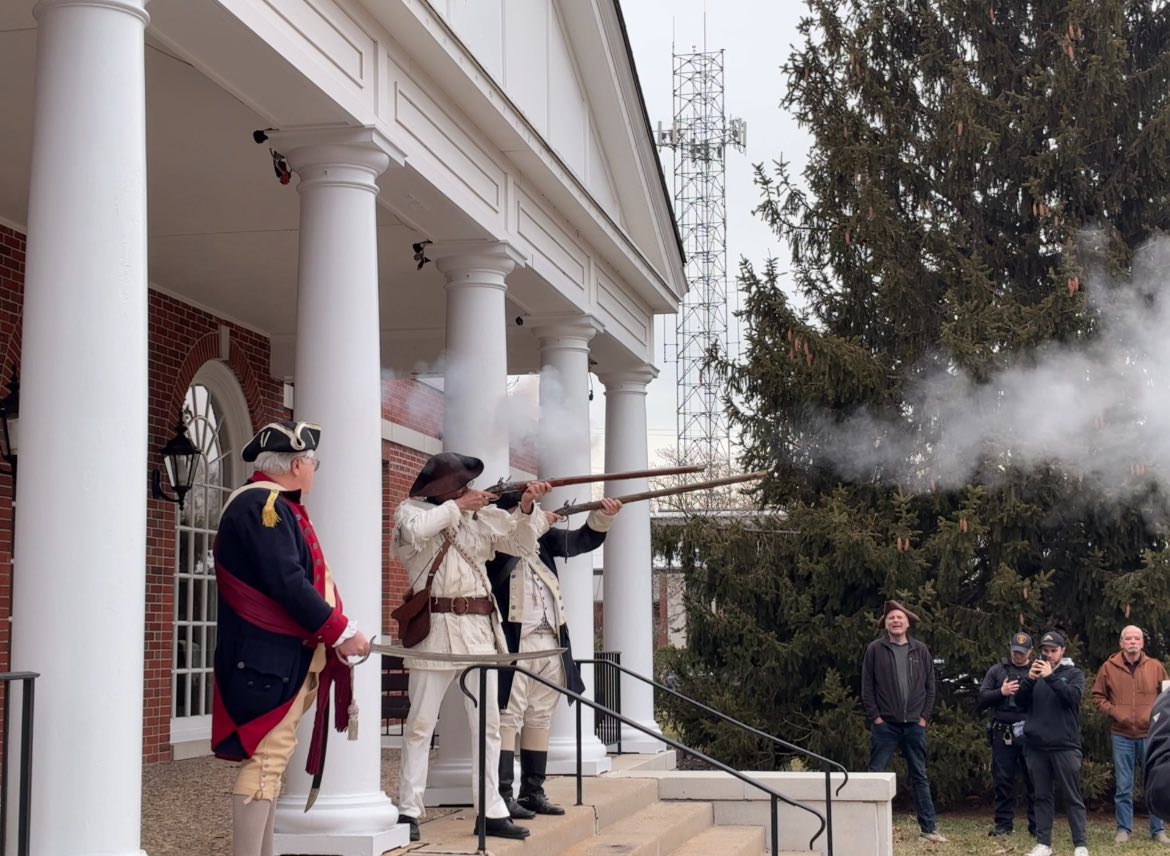
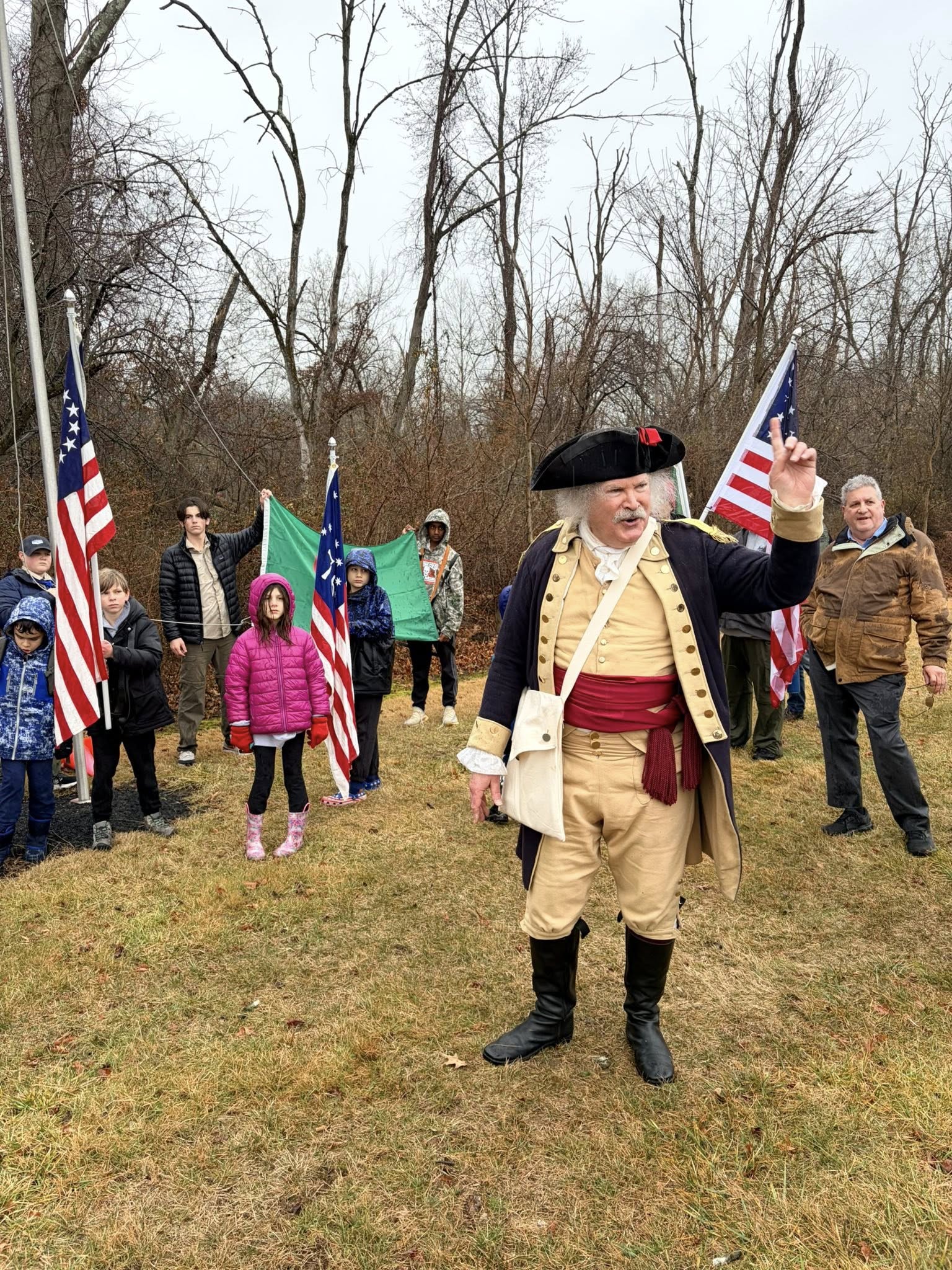
While most historians and authors have taken a chronological approach to explaining the campaign, author David Price offered a different “take” on it in his remarks at the annual Col. Hand Historic March on Jan. 10.
In his comments, Price outlined five main factors that played into the Americans’ victories – leadership, geography, weather, artillery and contingency.
The quality of leadership was most important, Price said. There were several errors by British commanders that worked in the Americans’ favor.
For example, the British and Hessian troops should have marched in two columns on their way from Princeton to recapture Trenton on Jan. 2, 1777. If they had done so, they might have outflanked the Americans.
Geography was another factor, Price said. The British and Hessian troops were spread out in distant outposts – from Burlington to Perth Amboy. The outposts were vulnerable to raids by the Americans, such as at the First Battle of Trenton.
The Assunpink Creek played a role in aiding the Americans in the Second Battle of Trenton on Jan. 2, 1777. The creek was swollen and the currents were rapid, preventing its crossing by the British.
The weather also had an impact – from blizzard conditions on Dec. 25, 1776 to muddy roads on Jan. 2, 1777.
The Christmas Day blizzard gave the Hessian troops a false sense of security ahead of the First Battle of Trenton, Price said. They were not expecting the American troops, who had crossed the Delaware River from Pennsylvania, to attack them.
A break in the cold weather turned roads into mud, which slowed down the British advance toward Trenton from Princeton on Jan. 2, 1777 on their way to the Second Battle of Trenton.
Artillery was another factor, because the Americans had many more cannons than the British. The American artillery, under the command of Gen. Henry Knox, blasted away any hope of a quick victory by the British, Price said.
And finally, there were contingencies – or “dumb luck,” Price said.
It was dumb luck that the British captured Gen. Charles Lee, who was Washington’s second-in-command, early in December. Lee was critical of how Washington led the American army and sought to take over command. But with Lee out of the way, Washington was able to take the bold steps that led to the Ten Crucial Days campaign.
The confluence of those overlapping factors – leadership, geography, weather, artillery and contingency – conspired to frustrate the British at a critical moment in their effort to overpower the Americans, Price said. Each was important in its own right.