


The idea of travel in Paris has always called to me, even before I fully understood why. Something about the city promised stillness amidst movement, a romance for those who roam.
Coming from a life wedged between Newark traffic and the quiet bustle of Montclair bookstores, I craved something older, something that held stories in its architecture and whispered poetry in its side streets.
When I finally booked my solo trip to France, it was not the glitter of the Champs-Élysées or the Eiffel Tower that guided my itinerary, but a map drawn in dog-eared pages and paint-stained brushstrokes.
I took the red-eye from JFK to Charles de Gaulle, eyes burning but excited, and arrived in the soft grey morning of early spring. I stayed in a modest apartment in the Marais, close to the Seine and within walking distance of many of the city’s literary and artistic wonders.
The pace here was gentler than at home. Quieter streets, no urgency to rush. Just the sound of footsteps on cobblestone and the occasional clink of porcelain from nearby cafés.
Paris for Book Lovers
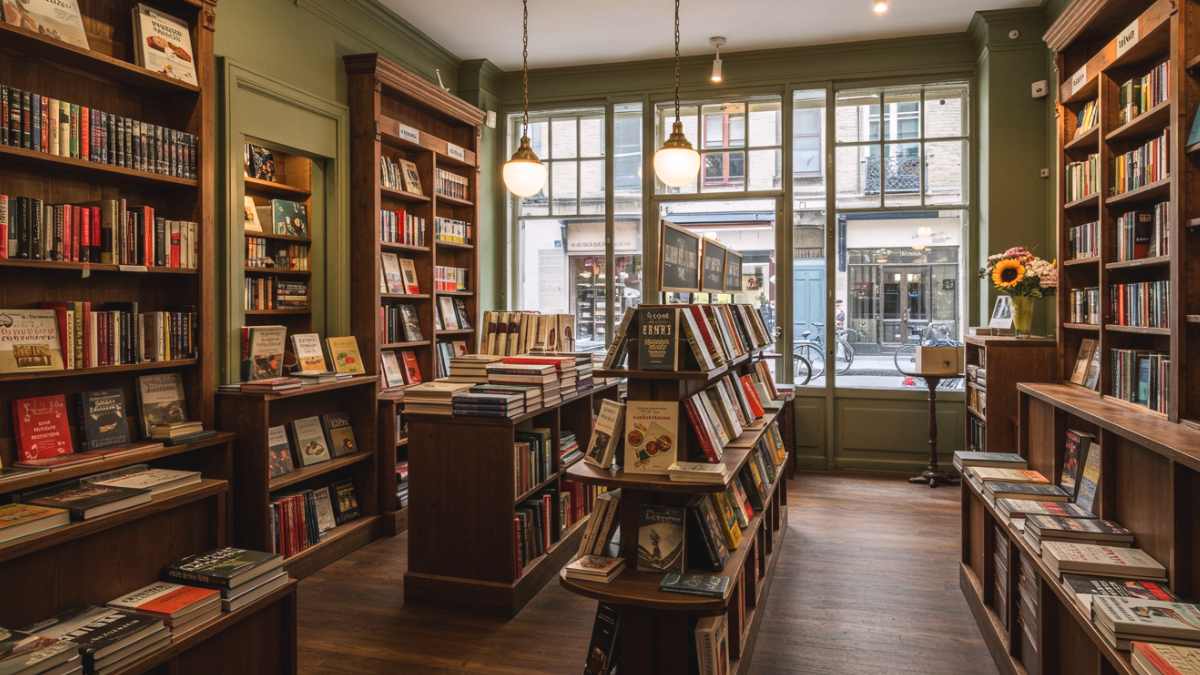
If there was one reason I had come to Paris, it was this. Paris for book lovers is not a cliché, itt’s a promise.
The city feels like it was built for writers, and perhaps it was. Its gardens offer quiet corners, its bridges offer views worthy of description and its bookstores seem to beckon.
Shakespeare and Company Bookstore
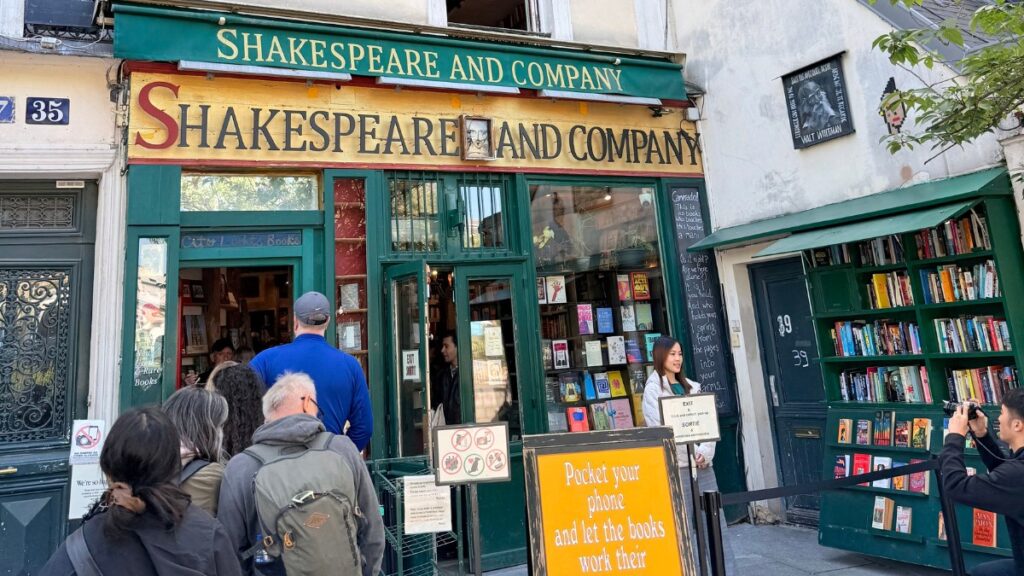
My first stop was the legendary English language bookstore, Shakespeare and Company. Nestled just across the Seine from the newly reopened Notre Dame Cathedral, the shop’s ivy-covered façade and green shutters felt like the opening line of a novel I’d waited my whole life to read.
Stepping inside, I was immediately enveloped by the scent of aging paper, dust and ink—a perfume only time can create. It felt less like entering a store and more like crossing a threshold into another realm entirely.
The store was a maze of narrow corridors and cramped staircases, lined wall to wall with books that had been loved. Every corner revealed something unexpected: a poem pinned to a corkboard, a Polaroid of a former visitor, a bench carved with initials and layered in timeworn cushions.
I wandered slowly, touching spines with reverence as if each one might whisper something if I listened closely enough. After nearly an hour of roaming, I found a faded copy of Anaïs Nin’s journals. The corners were bent, and there were notes in the margins, someone else’s private reflections in conversation with hers. I tucked it under my arm like a secret.
Upstairs, a piano sat quietly beside a window overlooking Notre Dame. A young man played Debussy, each note drifting into the narrow stairwell like mist. I settled into an old armchair nearby, flipping through the pages of my new book as the music wrapped itself around the room.
No bookstore back in New Jersey had ever felt so sacred, so lovingly disordered, so sure of its purpose. It was more than a place to buy books; it was a sanctuary for people who loved them.
Maison de Victor Hugo
The next morning, I made my way to Place des Vosges, one of the oldest and most symmetrical squares in Paris. In one of its corners sits the Maison de Victor Hugo, the once-home of the author who had already so vividly shaped my impressions of the city.
The square itself was quiet, birdsong echoing beneath the arcades and children darting between trees just beginning to bloom. The movement of life was seemingly slower here, reflective of the surroundings.
Inside the museum, I stepped into rooms carefully preserved and intricately styled to reflect Hugo’s taste and time. Ornate furnishings, political cartoons and embroidered drapery all spoke to a man whose inner world was as complex as the stories he penned.
What moved me most were his handwritten drafts and drawings, raw evidence of a restless, tireless mind.
In one corner, a simple writing desk looked out over the square below. I stood there for a long time, imagining the man sitting there centuries earlier, sculpting characters who would not only outlive him, but outlive us all for generations.
Notre Dame Cathedral
Just a short walk away, Notre Dame Cathedral stood tall and proud, reborn after the devastating fire of 2019. Its doors had only recently reopened, and I arrived early to climb the towers. The narrow stone staircase twisted like a spine, carrying me higher and higher until Paris spread out below like an open book.
Face-to-face with the famous grotesques, I could see why Victor Hugo had found such haunting inspiration here. Each sculpture was full of expression, be it mischievous, weary or watchful.
The view from the top was unforgettable. The Seine curved like a silver thread through the city, rooftops scattered like punctuation marks. I stood there, breathless from the climb and the view, feeling entirely present in a way I rarely do back home.
Père Lachaise Cemetery
Later that day, I took the metro to Père Lachaise Cemetery. It was a quiet afternoon, the light soft and low, the walkways dappled by the shade of tall trees.
I wandered without a map, letting instinct guide me past tilted headstones and crumbling statues. Eventually, I found the resting places of Oscar Wilde, Gertrude Stein, Marcel Proust and Colette. Their names, etched in stone, felt strangely alive.
Being there was less like visiting a cemetery and more like paying respects to a pantheon of minds that had quietly shaped the world.
Palais Garnier
In the evening, I slipped into something dressier and headed to the Palais Garnier. Though I didn’t have tickets to a performance, I booked a tour of the building itself. It felt like stepping into a dream stitched with velvet and gold.
The grand staircase shimmered under crystal chandeliers, and every hallway hummed with the echoes of history. As I stood in the box seats overlooking the stage, I imagined the Phantom watching from the shadows of Box Five.
The romance of it all was intoxicating. Even without music, the space felt alive.
Architectural Wonders in Paris
Paris doesn’t just tell stories with words; it does so with stone, iron and glass. As someone who grew up surrounded by colonial homes and strip malls, I found myself struck still by the city’s physical beauty.
Sainte-Chapelle
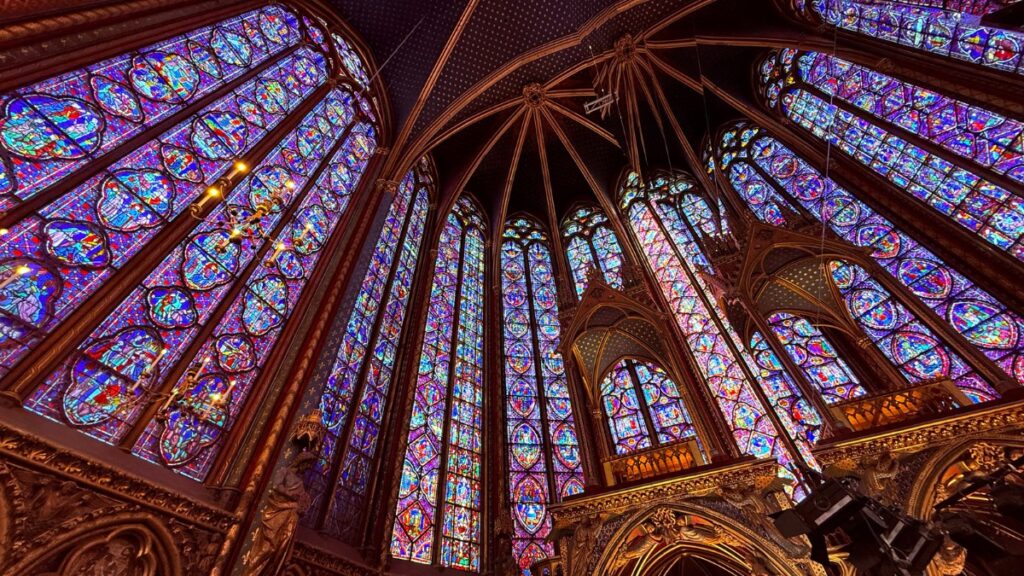
Walking into Sainte-Chapelle felt like stepping into a cathedral made entirely of light. Tucked within the walls of the Palais de la Cité, it’s smaller than many of Paris’s famous churches, but more awe-inspiring than I could’ve imagined.
As I entered the upper chapel, I had to pause.
The stained glass, which stretches floor to ceiling across fifteen panels, immediately overwhelmed my senses. Each one tells a different biblical story, a narrative mosaic rendered in ruby, sapphire, emerald and gold. The sunlight that filtered through them painted the floor, the walls and even my hands in shifting color.
I found a quiet wooden bench near the back and sat down, trying not to blink too often. I didn’t want to miss anything. The longer I sat, the more I noticed the small scenes in the glass I hadn’t caught at first, tiny expressions etched into faces, the symmetry of centuries-old craftsmanship.
It was profoundly moving, but in a hushed way, like a private prayer.
I thought about the architects who had constructed it for Louis IX in the 13th century, their vision so clear, their faith made visible. I left feeling somehow cleaner, like something inside me had been polished.
Panthéon
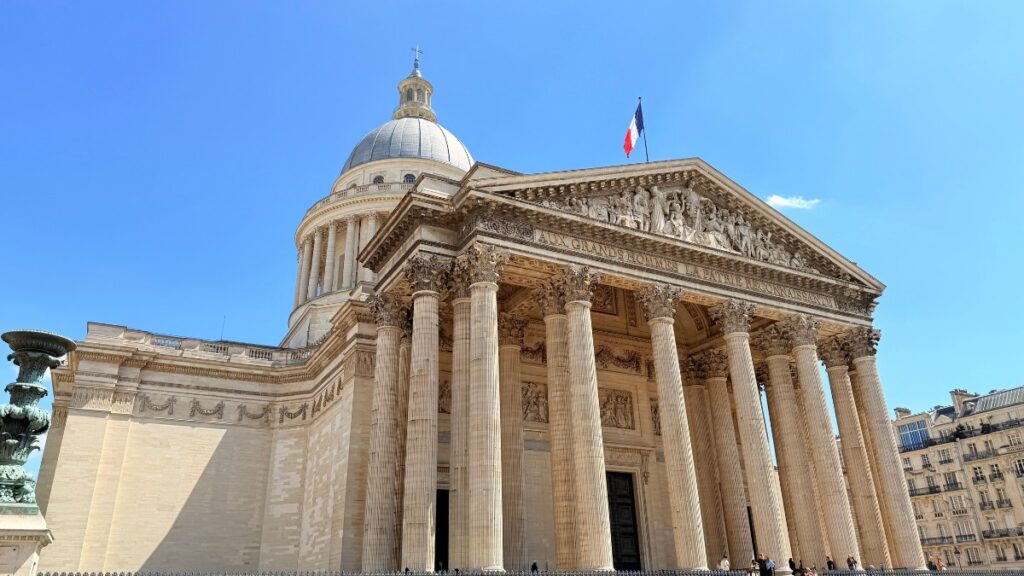
Afterward, I visited the Panthéon in the Latin Quarter. While Sainte-Chapelle was all delicate color and intimacy, the Panthéon exuded grandeur and weight.
As I walked through the neoclassical columns and entered the dome-lit rotunda, I felt immediately smaller. The vastness of the space and the remarkable echo of my footsteps gave it the aura of a monument more than a religious site.
Beneath the main floor lies the crypt, where France’s great thinkers, scientists and revolutionaries rest. I traced the names along the tombs: Voltaire, Rousseau, Victor Hugo, Émile Zola and Marie Curie. Each name was heavy with legacy.
It reminded me of visiting the Statue of Liberty or Arlington, places where history doesn’t just speak; it surrounds you.
The Panthéon carries the weight of France’s ideals: liberty, knowledge, progress. It was sobering and unexpectedly emotional.
Passage des Panoramas
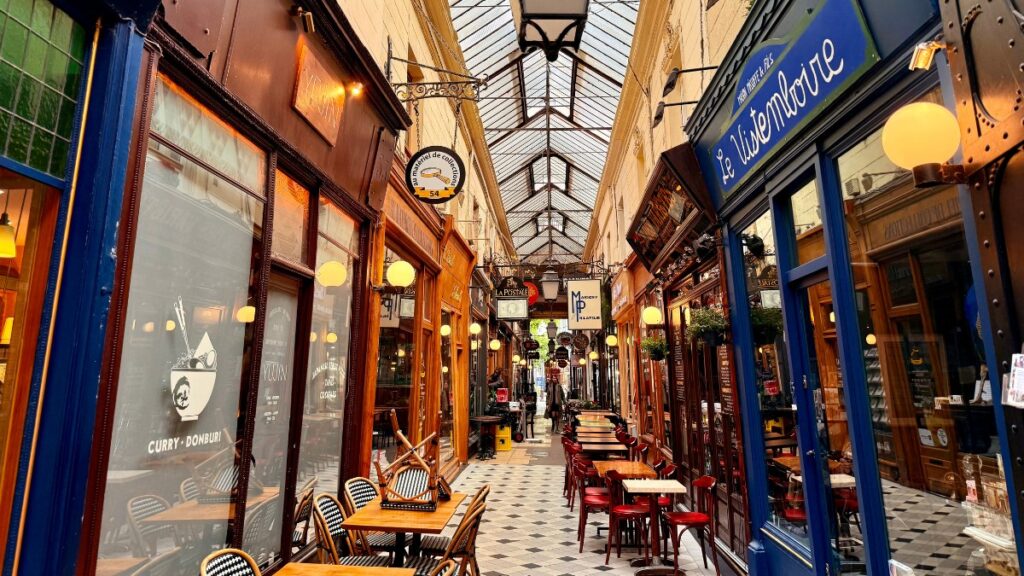
In search of something lighter, I wandered over to the Passage des Panoramas. It felt like Paris whispering one of its older secrets. Built in 1799, it’s the city’s oldest covered arcade, and stepping into it was like entering a different time.
Glass ceilings filtered the daylight just enough to give everything a golden, antique glow. The shops were a mix of vintage postcard sellers, stamp collectors, coin dealers and old-school bistros where you could easily lose an hour over a cup of tea and a notebook.
I did just that, finding a tiny café tucked beside a print shop and ordering something warm, pulling out my journal and jotting down observations. There was a gentle murmur of conversation, the clink of silverware and the soft rustle of paper bags. It was one of the most relaxing moments of my trip.
Eiffel Tower
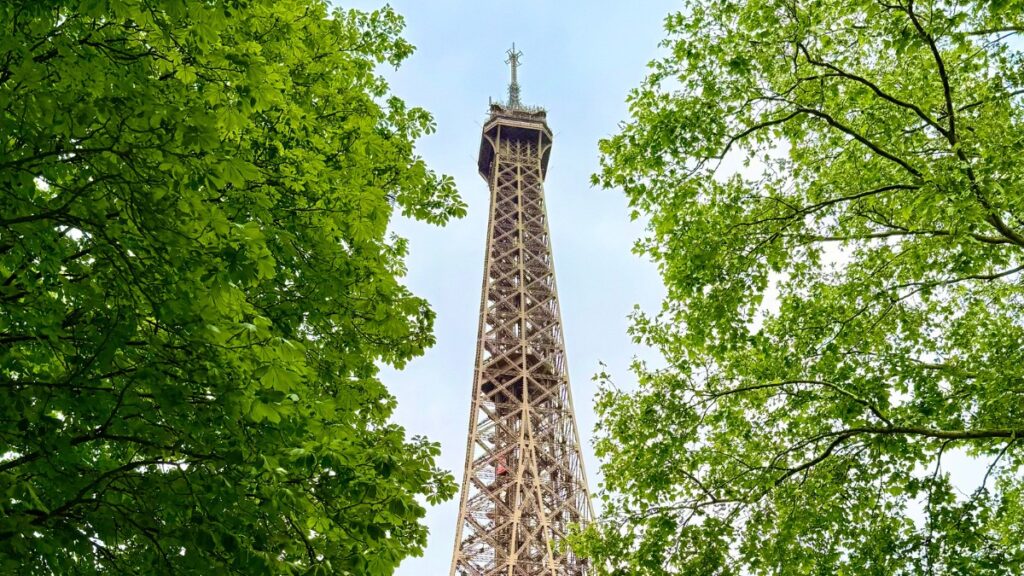
Standing beneath its iron lattice, it felt whimsical and defiant, like something built for no other reason than joy. The scale of it up close was surprising; it loomed, but didn’t intimidate.
As I looked up, the beams wove above me like poetry in metal. I didn’t go to the top, as there were lines, but I was content just being near it.
Watching couples pose for photos, friends laughing over sandwiches and kids racing around the base made me smile. It reminded me that icons endure not because they’re perfect, but because they mean something.
Hôtel Guimard
My final architectural stop was Hôtel Guimard in the 16th arrondissement, the former home of Art Nouveau architect Hector Guimard. The building seemed to melt out of the stone it was built from. Every window, every balcony, even the doorframe curved with an organic elegance, like vines growing upward.
Unlike the grand monuments I’d visited earlier, Hôtel Guimard felt deeply personal. Its beauty wasn’t showy but intentional, a quiet act of devotion to form and nature.
I didn’t go inside, as it’s private property now, but standing outside and admiring the façade was enough. It made me think about how artistry isn’t always in the grandest things.
Sometimes, it’s in the curve of a window, the bend of a line, the confidence of doing something differently. I carried that feeling with me the rest of the day.
Discovering Art in Paris
There is no separating Paris travel from art. Museums feel like places of pilgrimage; however, it wasn’t just the expected stops that moved me, but how even the unconventional corners offered something profound.
Aura Invalides
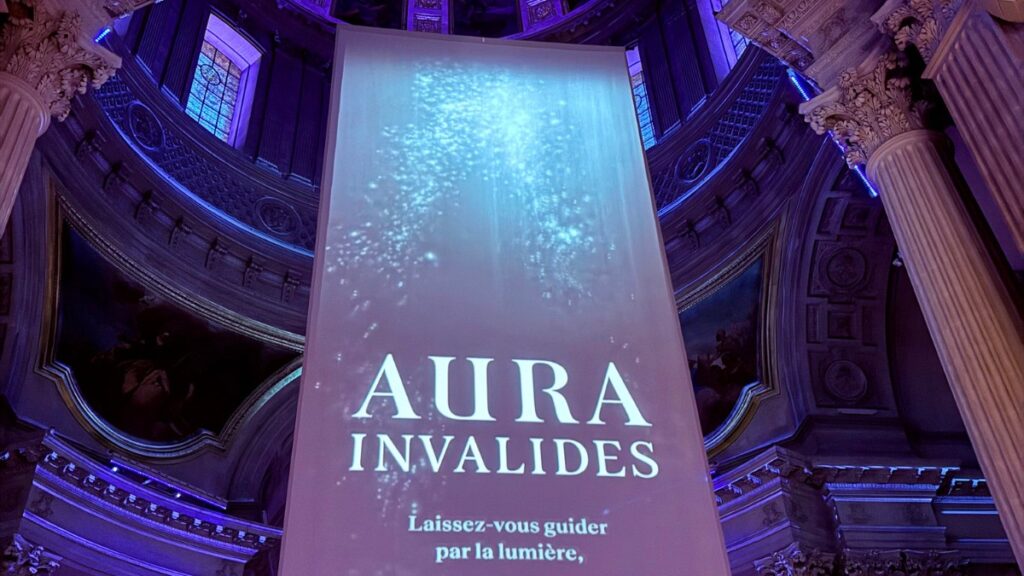
One of the most unexpected highlights of my trip was attending the Aura Invalides immersive light and sound experience. Held inside the Dome Church of Les Invalides, where Napoleon Bonaparte is entombed, the show was unlike anything I’d ever experienced in a museum or sacred space.
I arrived just before dusk, the building glowing faintly in the twilight. Once inside, the ornate Baroque architecture melted into shadow, only to be reborn through projections of light and color dancing across the domed ceiling and marble pillars.
The experience was orchestrated like a symphony, each burst of color accompanied by swelling music and moments of deep silence. The projections shifted between constellations, sacred geometry and images from French military history.
At one point, a wave of stars surged across the ceiling, cascading over Napoleon’s sarcophagus like a visual blessing. The entire crowd stood in stillness, heads tilted upward, some with tears in their eyes. It felt less like a show and more like a meditation.
That evening lingered in my mind long after I stepped back into the night air, wrapped in a new sense of awe.
Musée du Louvre
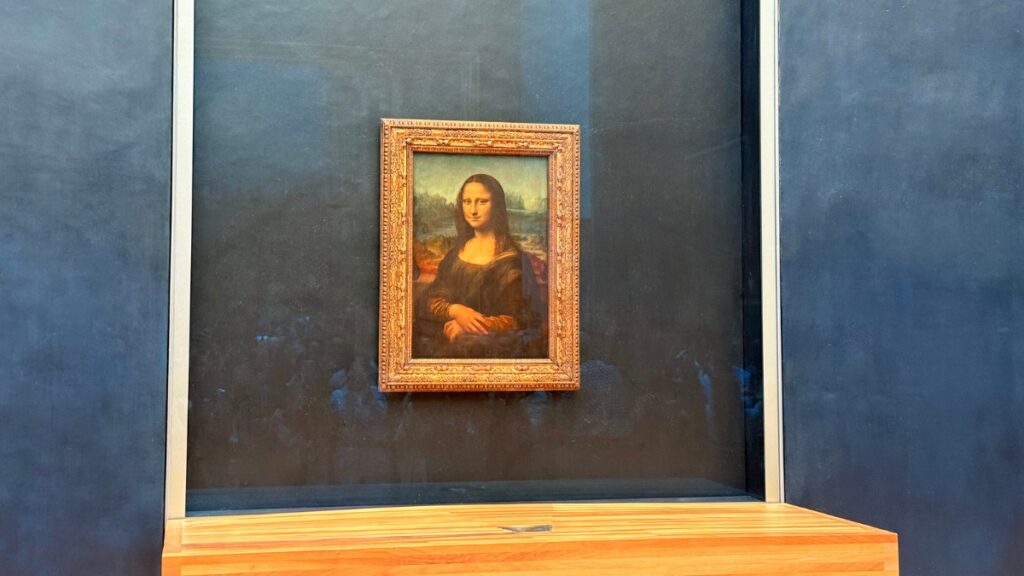
I made my visit to the Louvre on a grey weekday morning, determined to experience the world’s most iconic museum, crowds and all.
I entered through the glass pyramid and joined the river of visitors streaming through its vast halls. Yes, I saw the Mona Lisa behind a sea of raised phones; her small frame was underwhelming, but her gaze was undeniably magnetic.
The Louvre’s magic lives in its quieter corners. I found solitude in the Mesopotamian wing, standing directly in front of a winged Assyrian lion with eyes carved in a confident, calm expression. In another hall, the Venus de Milo stood radiant in her incomplete perfection.
The deeper I wandered, the more the noise of the museum faded. It began to feel like time was folding in on itself, each gallery offering a window into a different era, a different world.
It was less about seeing everything and more about letting certain pieces stop me in my tracks.
Guimet Museum
Tucked away near the Trocadéro, the Guimet Museum offered a completely different experience. Focused on Asian art, it was serene and spacious, a breath of calm after the visual overload of the Louvre.
I found myself moving slowly through its exhibits, guided more by intuition than order.
The galleries traced centuries of spiritual and cultural development across East and South Asia.
I stood for ages before a Tibetan mandala, mesmerized by its detail. A serene stone Buddha from Cambodia, eyes gently downcast, seemed to fill the entire room with stillness.
The museum’s layout encouraged contemplation, its lighting gentle and warm. In under two hours, I felt I had traveled further than any flight could have taken me.
Musée d’Orsay
If the Louvre was a labyrinth, the Musée d’Orsay was a revelation.
Housed in a former railway station, the museum’s architecture was half the wonder. Sunlight spilled through the giant clock faces and iron-trussed ceilings, casting shifting patterns on the polished floors below.
I was drawn most to the Impressionists, rooms filled with light and brushstrokes that felt like memories made visible. Monet’s Water Lilies, Van Gogh’s Starry Night Over the Rhône, Degas’ ballerinas in mid-pirouette. I stood in front of each one until my feet ached, and the guards gently ushered me on.
Here, art wasn’t frozen in reverence; it danced. It invited you to feel, rather than to simply analyze.
Musée de Cluny
My final museum stop was the Musée de Cluny, tucked into the Latin Quarter and dedicated to the art and artifacts of the Middle Ages. It was quiet, atmospheric and almost reverent. Inside its dim, vaulted chambers, I found ancient tapestries, ivory carvings and relics that seemed to breathe history.
The Lady and the Unicorn tapestries held me, in particular. Each one pulsed with allegory and mystery, their faded threads woven with symbolic depth. I slowed my breathing instinctively, afraid that even the rhythm of my steps might disturb them.
The museum was more about presence than display. It asked for your stillness, your attention and your willingness to listen to the past whispering through fabric and stone.
Historical Restaurants and Cafés in Paris
Paris isn’t just about where you walk, but where you sit and let the world walk past you. Cafés are institutions, and many carry stories thicker than their coffee.
Café de Flore
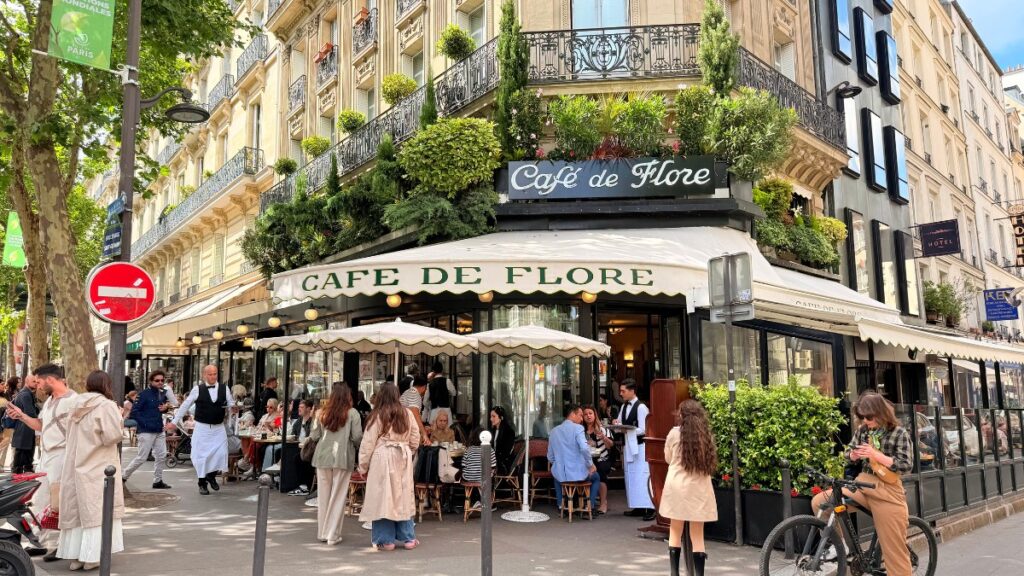
At Café de Flore, I ordered a café crème and let the late-morning sun warm my shoulders through the glass. The energy was unhurried, almost theatrical, as servers in pressed white aprons weaved between tables, balancing silver trays with the grace of actors in a decades-old play.
I imagined Simone de Beauvoir at the following table, her pencil poised mid-thought, perhaps eyeing Sartre’s expression across from her.
Every element of the space seemed curated for reflection: the clink of porcelain, the murmur of conversations, the rustling pages of books held between sips.
Unlike back home, where coffee often comes in to-go cups and emails follow you to the table, this was a place that demanded presence. I stayed longer than I expected, letting time stretch out around me.
Les Deux Magots
Next door at Les Deux Magots, the scene was equally storied, though the atmosphere felt more public.
I was lucky enough to get a window seat and ordered a noisette. Outside, the Parisian world strolled by in linen and leather shoes framed perfectly by cream awnings and striped cushions.
I thought of Hemingway sitting in the same corner, perhaps staring at his notebook before the words came. Camus and Picasso, too, had left their trace here. I tried to feel worthy of my seat, scribbling a few lines in my journal as if that act alone might connect me to the place’s legacy.
La Closerie des Lilas
Later, I would wander over to Montparnasse and find myself beneath the green awning of La Closerie des Lilas. It still glowed with the glamor of the Roaring Twenties, though the crowd now was more well-dressed locals than bohemian intellectuals.
I ordered a Kir Royale, cracked open Tender Is the Night and let the music, a faint jazz trio inside, wrap around me. It felt almost sacred.
Dingo Bar
I nearly walked past Dingo Bar, now L’Auberge de Venise, as its literary history is almost hidden behind a modern façade.
It was here Hemingway met Fitzgerald for the first time. A server noticed me pausing and, with a warm smile, led me in and showed me around, narrating their meeting like a fable passed down by heart.
Le Procope
My last stop was Le Procope, the oldest café in Paris. It felt like sitting inside a museum where you were still allowed to order lunch.
Voltaire supposedly drank up forty coffees a day here, often mixing it with chocolate. Benjamin Franklin drafted diplomatic letters at a nearby table, as well.
I sat beneath a dusty chandelier and wrote postcards, trying to capture even a sliver of their eloquence.
Frequently Asked Questions About Paris Travel
Paris can feel overwhelming, especially for first-timers. I went in with a list, but learned a few lessons worth sharing.
What should I pack for a trip like this?
Layers, comfortable shoes and a lightweight umbrella, as the weather can be fickle. Plus, bring a journal, always.
Do you need to book museums and experiences in advance?
I booked most online a week or two ahead. Skip-the-line options were helpful, but not every museum required them.
Is Paris safe for solo travelers?
Yes, I found it completely safe. However, like any major city, always stay aware of your surroundings, especially at night.
When is the best time to go?
Early spring or late fall, as there are fewer crowds, cooler temperatures and a more romantic, contemplative air.
Art and Literature: France’s Treasured Scenes
There’s something about travel in Paris that softens the soul; if you’re looking for art and literature, France is the place to go.
Even coming from the sharp edges of New Jersey, I found myself slowing down, listening more, observing differently. Paris teaches you to linger, to appreciate, to wonder.
This won’t be my last time wandering its bookstores or sipping espresso where legends once argued about philosophy and love.
If you have ever loved a book, if you have ever paused to stare at a painting just a little longer than necessary, Paris is waiting for you.
Make the time. Make the journey. Let Paris travel through you, too.