


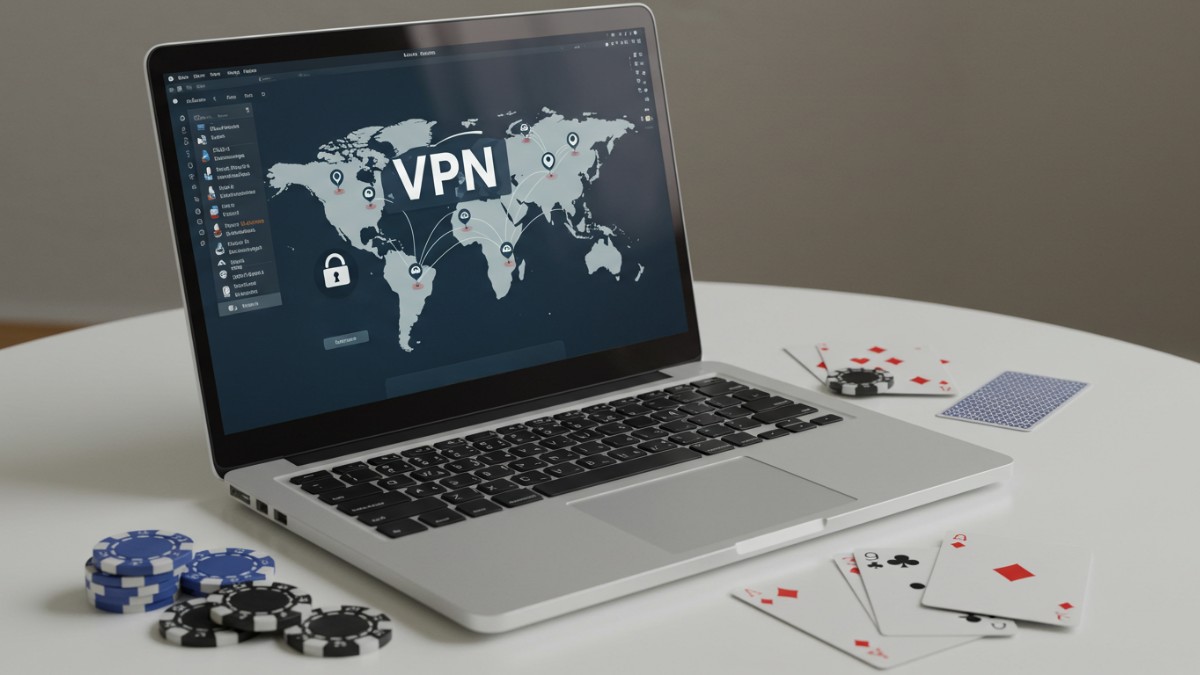
As a digital nomad working across Europe, I’ve gotten used to juggling time zones, Wi-Fi quality, and geo-restricted apps. But when my usual betting platform suddenly blocked access right before a Champions League match, I realized just how tricky online gambling can get when you’re constantly crossing borders.
I connected to a VPN, switched my virtual location, and managed to place the bet in time. Problem solved for now.
But it raised bigger questions: Is using a VPN for online gambling really a reliable solution? Are there legal risks? And does it work consistently across different countries?
After months of navigating regional restrictions and testing different providers, here’s what I’ve learned.
DOWNLOAD THE BEST VPN FOR BETTING TODAY
Can You Use a VPN to Sports Bet?
First things first: The short answer is yes, but a VPN is not a magic door you can walk through whenever you like.
A VPN can hide where your phone or laptop seems to be, yet it can’t erase every trace you leave behind. Local laws still call the shots, the sportsbook’s own rules decide whether they’ll pay you if you win, and your payment method is its tattletale.
If you’re logged in from Berlin on a VPN for gambling while your bank card shouts “Ohio, USA,” expect problems. The ID check you skipped last week might show up the moment you try to withdraw a win.
So, can you use a VPN to sports bet? Technically, yes. Can I use a VPN to sports bet without thinking twice? Not really. It will work smoothly only when those three pieces (local law, site policy, and payment trail) click into place.
Five Things I Learned About Using a VPN for Gambling
- IP quality beats speed. A slower “clean” server that hasn’t been black-listed slips past blocks far better than the fastest node on every site’s radar.
- Your payment method tells on you. A VPN hides your location, but banks still see gambling codes. Card mismatches can lead to frozen accounts.
- Free VPNs cost you wins. Tiny server pools, random drop-outs, and throttled speeds can stall a live bet or lock a bad line.
- Regulated sites can reject payouts if they smell VPN traffic. Italy’s .it book froze my balance the second an automated check flagged a foreign signature. “Policy breach” justifies this action, even when the betting itself was fair.
- Read the site’s T&Cs before your first spin. Each sportsbook hides its VPN clause four pages deep. Spend ten minutes of fine-print reading to save yourselves from “winnings cancelled” emails.
Why I Ended Up Sticking With Proton VPN for Online Sports Betting in Europe
I’d already been a Proton user back in Ohio, long before I started my digital nomad path. What kept me loyal wasn’t a single “aha” moment abroad. It was years of quiet reliability that newer tests in Europe only confirmed.
Consistent speed comes first. Proton’s 10 Gbps average and smart routing keep live-odds updates refreshed, no matter which WiFi you connect to. I’ve never had a live betting session that froze mid-refresh.
Stealth mode is the next best thing. When Germany’s filters blocked every regular tunnel, Proton’s obfuscated setting made my traffic look like normal web browsing. The sportsbook opened, live stats rolled in on time, and I never had to guess what was happening on the field.
Proton’s security also deserves a mention. Its no-logs policy has been checked by independent auditors, so there’s no record-tying bets to my real IP. NetShield, the built-in blocker, stops fake bonus ads and phishing pages before they appear, which is a great feature.
If you want one VPN for gambling that passed every test on this trip, Proton it is. They also have a no-excuse 30-day money return policy, so you can go out and explore how good it is on your own without batting an eye.
Try Proton Now with a Money-Back Guarantee
My Three-Stop European VPN & Betting Road Test
My experience with online betting in Europe was sort of experimental. I traveled a lot while I was there, and though some parts I visited (Spain, the Netherlands, Portugal, and Malta) allowed online gambling, some didn’t.
I’m here to talk about my experience with the latter.
1. Online Sports Betting in Germany: “Don’t trust regulations”
Here’s how Germany taught me not to trust regulations:
I read about how Germany sort of legalized nationwide sports betting in 2023, so I thought online sports betting would be easy here. So I went ahead and gave it a try without my VPN. Guess what? Blocked! The message said the site couldn’t verify my “exact location,” which made no sense because I was right there in Germany.
I switched on Proton VPN and chose a server in Frankfurt. No luck. The app still refused me, probably blacklisting every obvious German VPN IP. I tried again with a Netherlands server, cleared my cookies, and refreshed. This time the page loaded, odds and all, but the live match tracker lagged by a second or two.
I placed a modest €40 bet on a win late that night, then left my hostel. After a techno-music-infused Friday night in Berlin (Germany does not disappoint), I was happy to see I won and the €17 profit hit my account before I left my bed the next morning (well, afternoon, actually).
Note that I gave Germany the benefit of the doubt and tried to check the results without my VPN. It was still blocked. I connected to the hostel WiFi (which was very much in Berlin), yet there was still no luck. So I turned on Proton VPN and selected the same Netherlands server to see the results.
So, hear me when I say: Even in a fully regulated market, a VPN for gambling still trips alarms, and switching servers is sometimes the only fix.
2. Online Sports Betting in Greece: “Stealth Server is Useful”
I landed in Athens already knowing that Greece keeps its online sports betting market tight. I learned from my research that just a couple dozen operators hold local licenses. Anything offshore lands on a public blacklist and orders every ISP to block them.
I learned that most providers do that in two layers: they stop the DNS request for a listed site and, for good measure, run deep-packet inspection (DPI) that spots ordinary VPN signatures and drops the connection.
I tried the straight route first. No VPN, instant block. Then I turned Proton on and connected to a server in Athens. Still blocked. I tried a German server. Also blocked. It was obvious. The DPI could still tell that mine was VPN traffic.
The fix was Proton’s Stealth protocol. It wraps the VPN traffic in a special layer so it looks like normal HTTPS. I switched on the Stealth mode and connected to a London server. After clearing cookies, my sportsbook loaded at full speed and stayed stable during in-play odds refreshes.
Payments were the second hurdle. Greek banks reject foreign-coded gambling transactions, so my US debit card failed twice. Only a €50 top-up from a crypto-backed e-wallet went through.
Lesson learned: in Greece, the site blocklist is only the first half of the wall. The DPI that identifies VPN traffic is the other half. A stealth connection is necessary to access your sports betting website!
Online Sports Betting in Italy: “Codice Fiscale or No Cash-Out”
Italy looks friendly at first glance. Lots of licensed .it sportsbooks, English menus, competitive odds. But they don’t welcome you just because you have an Italian IP. Each licensed site in Italy asks for two items most visitors don’t have: an Italian codice fiscale (tax code) and, on many brands, a SPID digital ID to unlock withdrawals.
Non-residents can apply, but the process requires an Italian photo ID or residence paperwork most short-term travelers just can’t bother retrieving.
I tested the waters from my hostel. With Proton VPN off, the site loaded fine; Italy doesn’t block offshore domains the way Greece does. I followed through with account creation until the KYC screen demanded my codice fiscale.
Then I turned Proton VPN on and tried multiple servers in Paris, Zurich, and Lisbon, but no luck. It was always the process. I was able to deposit on the sportsbook, but the moment I clicked “withdraw,” it froze the balance pending tax-code verification. Live chat confirmed the rule: no codice fiscale, no payout.
What are the workarounds? A few offshore sites ignore Italian law, but local banks often reject their card transactions. So I used a crypto-only book that skips ID, tunneled through a server in Milan, and placed a modest wager.
Final Thoughts & Next Steps
A VPN is not a shortcut; it is a tool that solves your problems when you use it properly. My short trips around Europe proved that gambling rules can change from one city to the next.
Pick your server as carefully as your flight, keep your payment methods flexible, and set clear limits before you place a bet. If you do that, most of the usual headaches disappear. I trust Proton because it stayed fast, slipped past the strictest blocks, and never kept logs that tie back to me.
If you want to see whether it fits your own routine, their 30-day money-back guarantee gives you an easy way to find out!
FAQs About Using VPNs for Sports Betting (≈ 200 words)
Can I use a VPN to sports bet in Europe?
Yes, but it depends on where you are and which site you use. Many European countries don’t block offshore sportsbooks, so a VPN simply adds privacy. Others blacklist unlicensed sites and run a deep-packet inspection to spot VPN traffic. If the country or the sportsbook decides you’re breaking their rules, they can freeze your account.
Check local laws first, choose a server in a country where the site is legal, and clear cookies before you log in.
Is a free VPN safe for betting?
Usually not. Free services have small server lists and heavy traffic, so they disconnect more often and get flagged faster. Some log your data or inject ads. A dropped connection in the middle of a live bet can void the wager or lock the odds at a bad number.
For anything that moves real money, a paid VPN with a no-logs policy and stable speeds is the safer choice.
Can a site void winnings if I use a VPN?
Usually not. Free services have small server lists and heavy traffic, so they disconnect more often and get flagged faster. Some log your data or inject ads. A dropped connection in the middle of a live bet can void the wager or lock the odds at a bad number.
Will a VPN hide gambling from my bank?
No. A VPN masks your IP address, not your payment trail. Your bank still sees the merchant code for gambling. If you need extra privacy, use crypto or a neutral e-wallet.
Can I use a free VPN for sports betting?
You can try, but it rarely works well. Free services run slower, have small server lists, and lose connection more often, which are all problems that can freeze live bets or flag your account for suspicious activity.
Can a sportsbook ban me or void my winnings for using a VPN?
Yes. Many sites reserve the right to cancel bets or close accounts if they detect VPN traffic. Read the site’s T&Cs first, and use a reputable VPN with obfuscation (like Proton’s Stealth mode) to lower the risk of detection.